Launch offer — valid today only

📄 Digital book in PDF · read it on your phone or print it

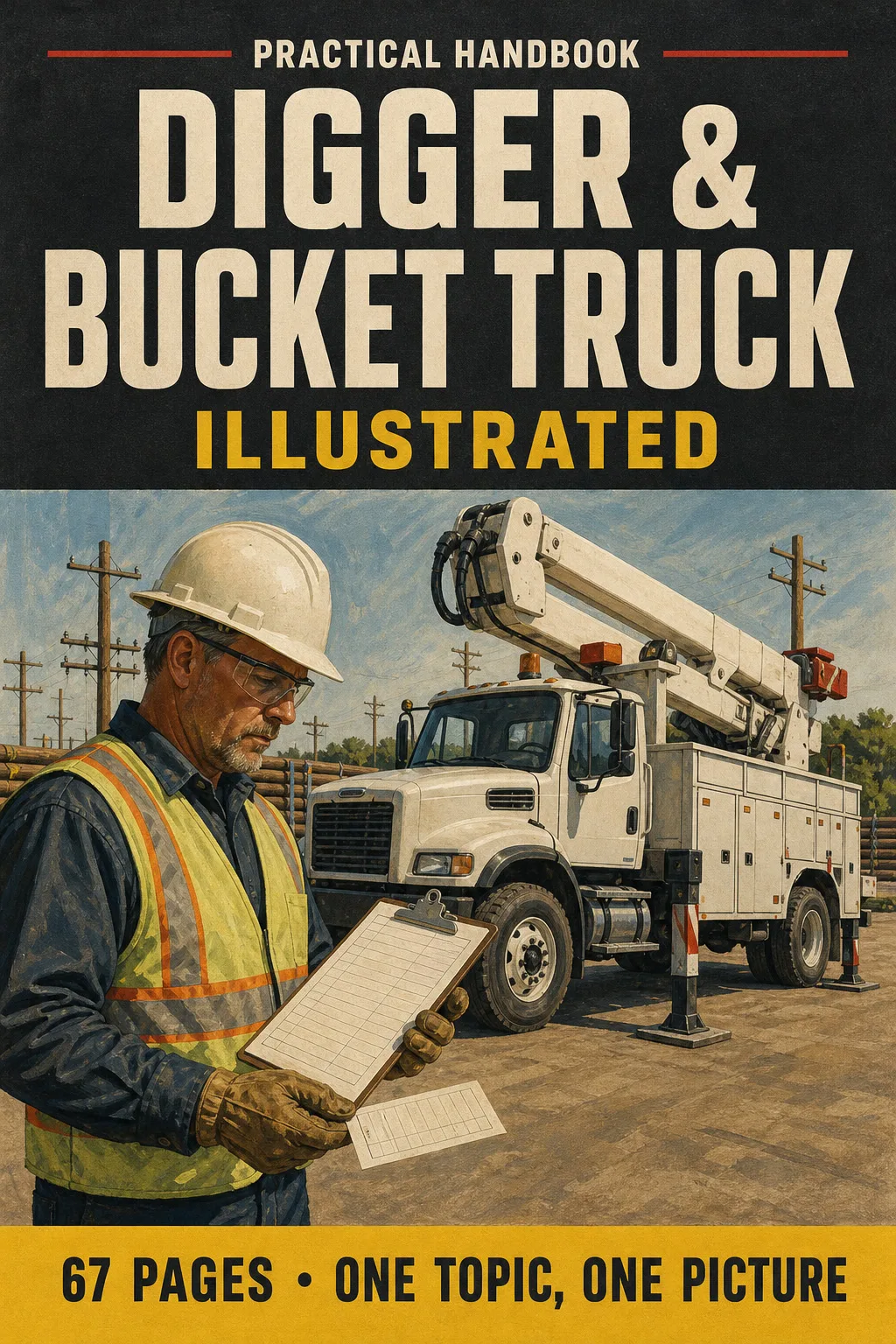
Digger Derrick & Bucket Truck Qualification in Drawings Every Step in the Same Order

Truck parts, pre-use inspection, outriggers on any ground, the load chart in 5 steps, auger digging, setting and pulling poles, insulated booms, minimum approach distance and hand signals. Every topic has its own page: the drawing first, then what you need to remember. 67 illustrated pages.

START STUDYING THIS WAY

🔒 Secure checkout · PDF by email · 30-day guarantee

Every topic, its own pageEvery setup step and load chart step drawn, with the explanation right beside it
67 illustrated pages9 parts, from the truck in cutaway to the most common setup and load chart mistakes
Up-to-date sourcesOSHA 29 CFR 1910.269 and 1926 Subpart V, ANSI A92.2 and A10.31
PDF by emailFormat

Look Inside the Book

Every page has a big drawing and a box with the steps, distances and numbers you need to know:

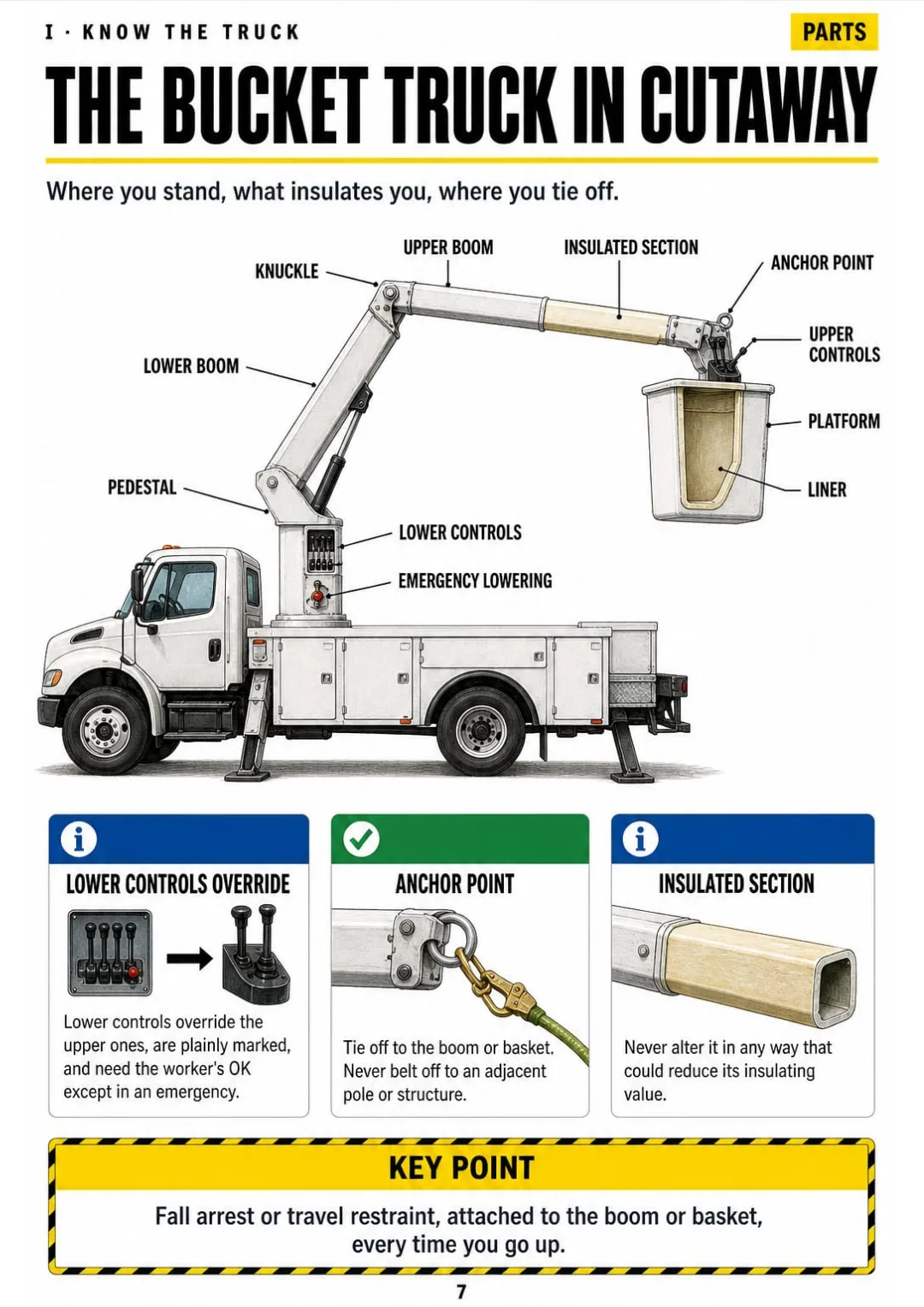
Pedestal to platform: knuckle, insulated section, liner, both controls, emergency lowering and anchor point.
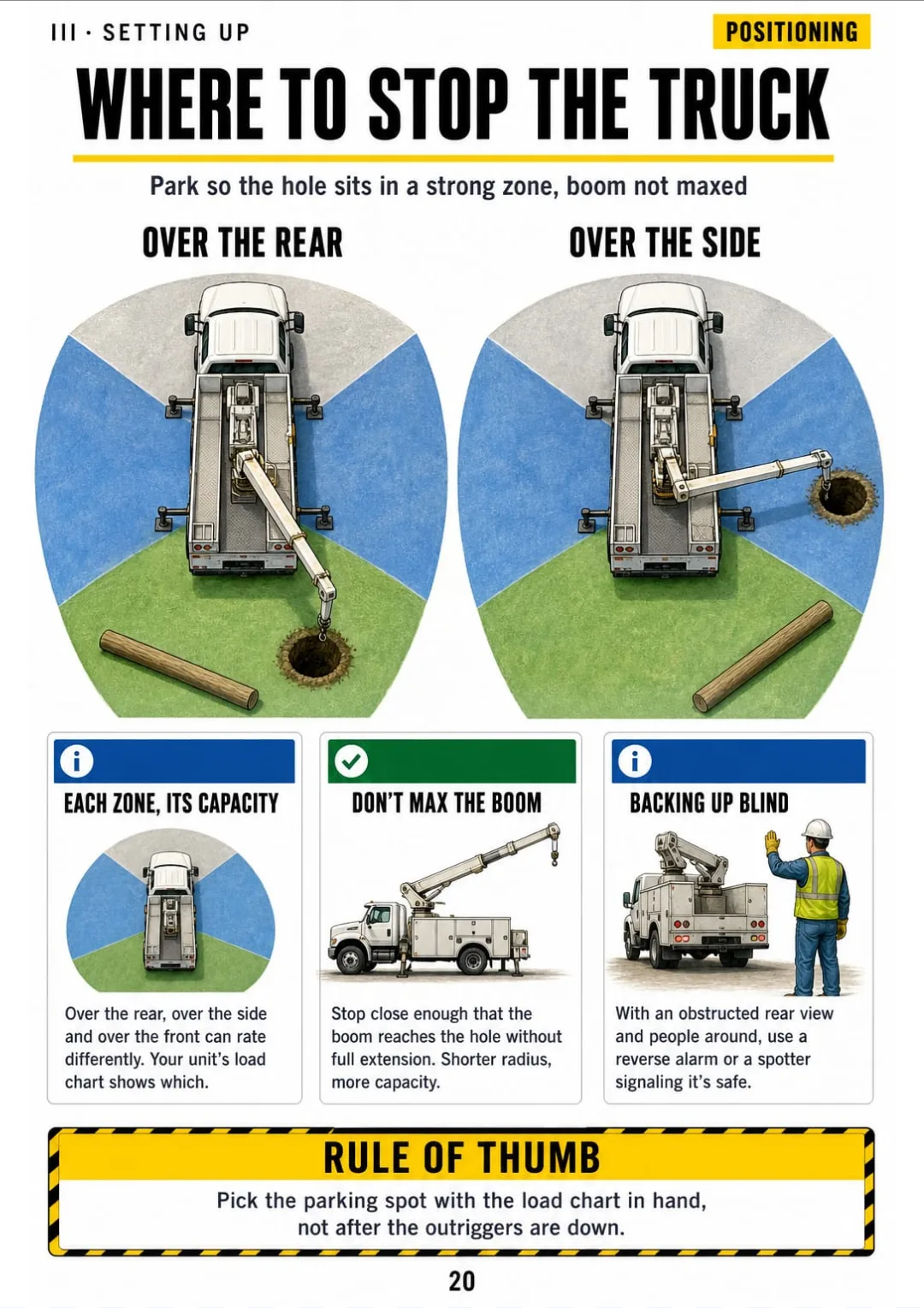
Over the rear vs. over the side: each zone has its own capacity on the chart.
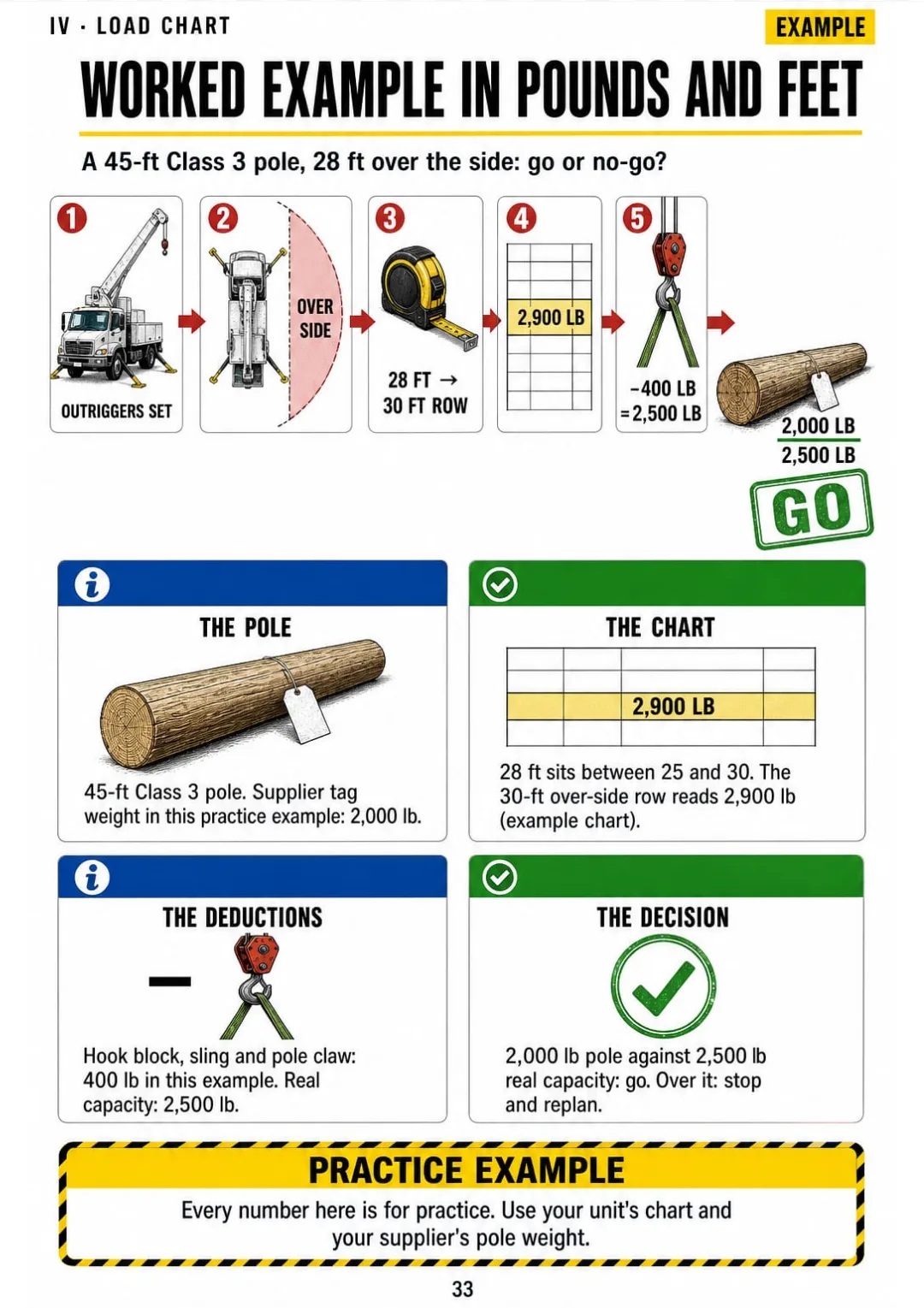
45-ft Class 3 pole at 28 ft over the side: the 5 steps with every number
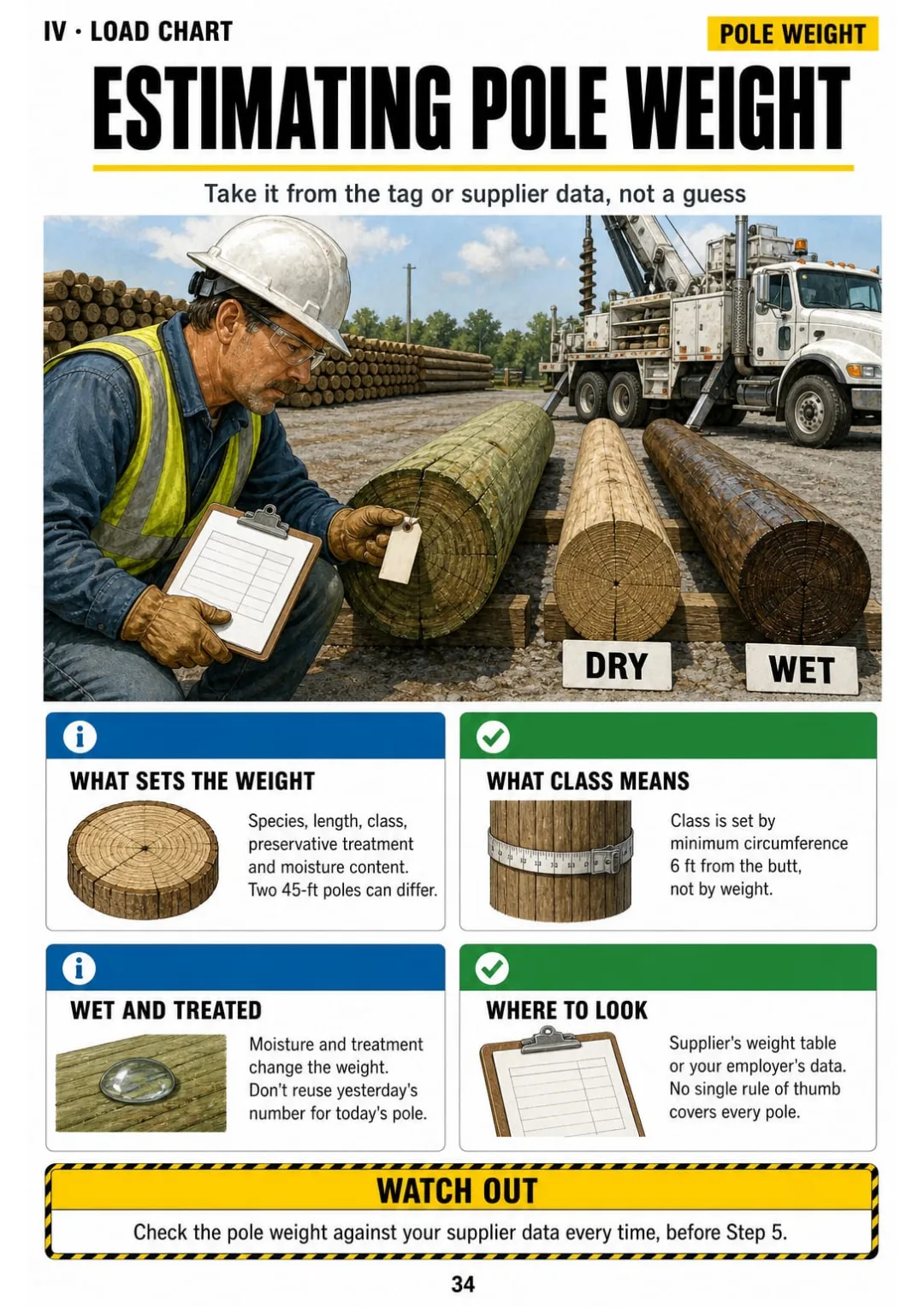
Pole weight comes from the tag or supplier table: species, class, treatment, moisture
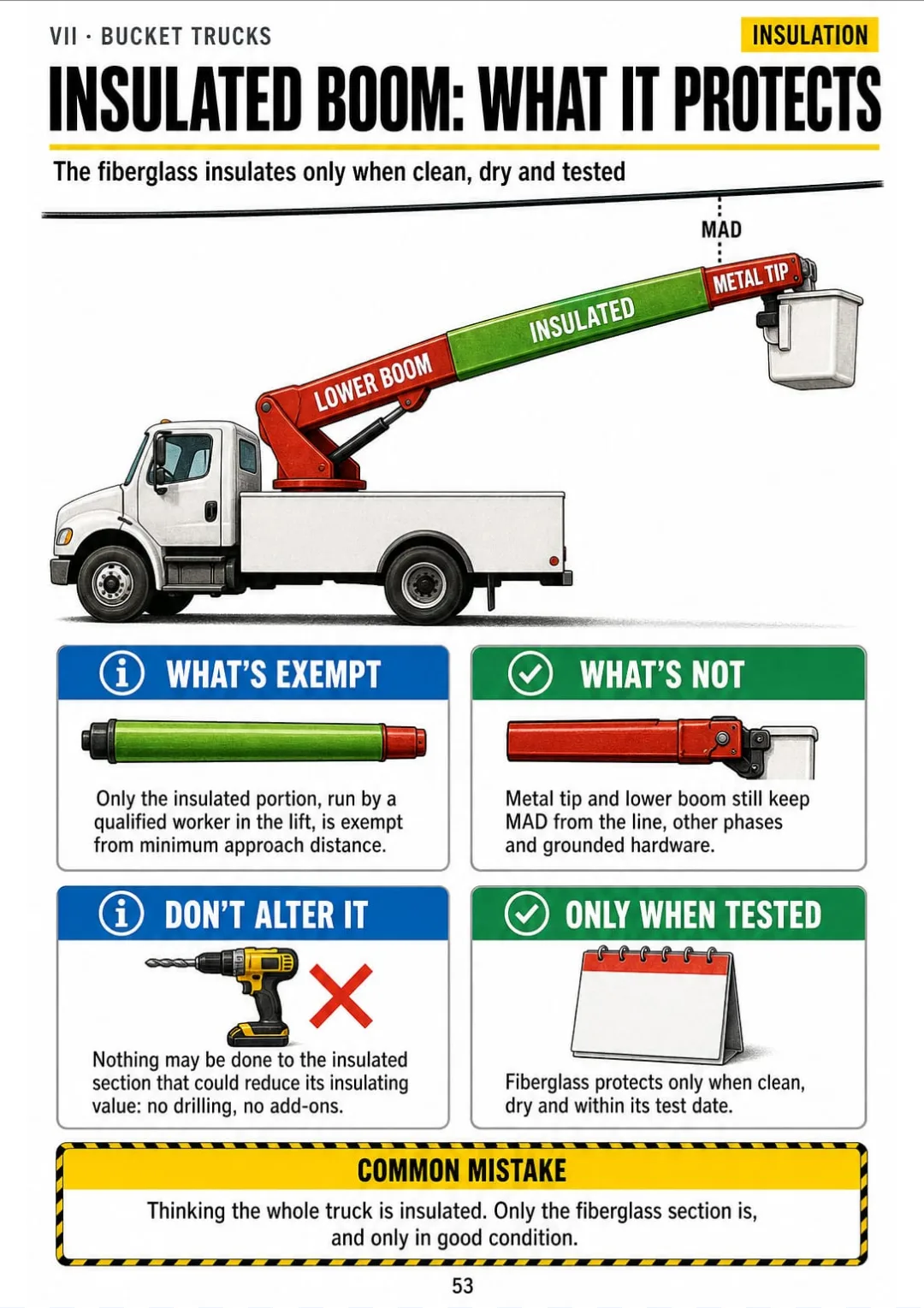
Green is insulated, red is not: the metal tip and lower boom still keep the approach distance.
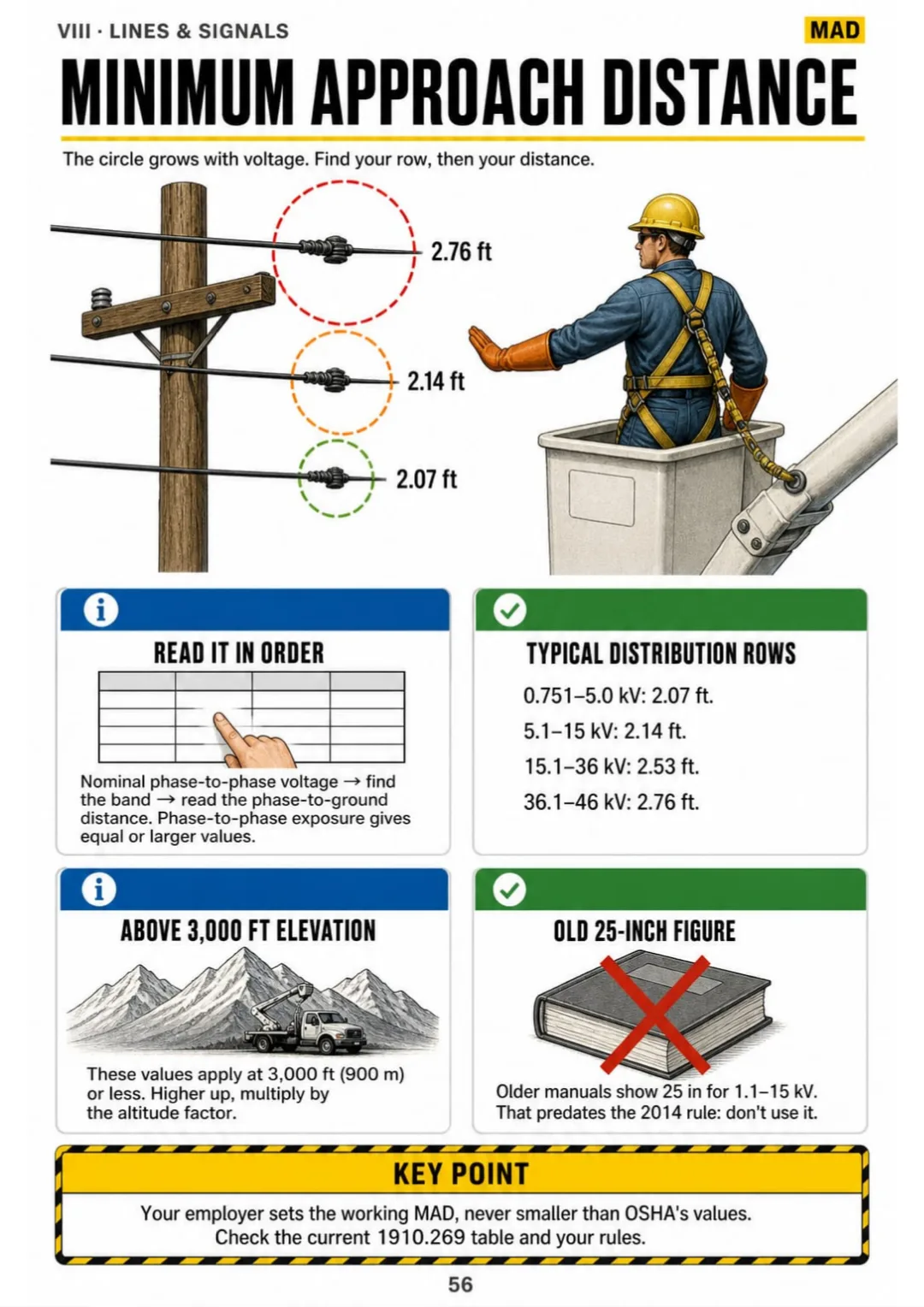
5.1–15 kV phase to ground: 2.14 ft, not the old 25 inches.
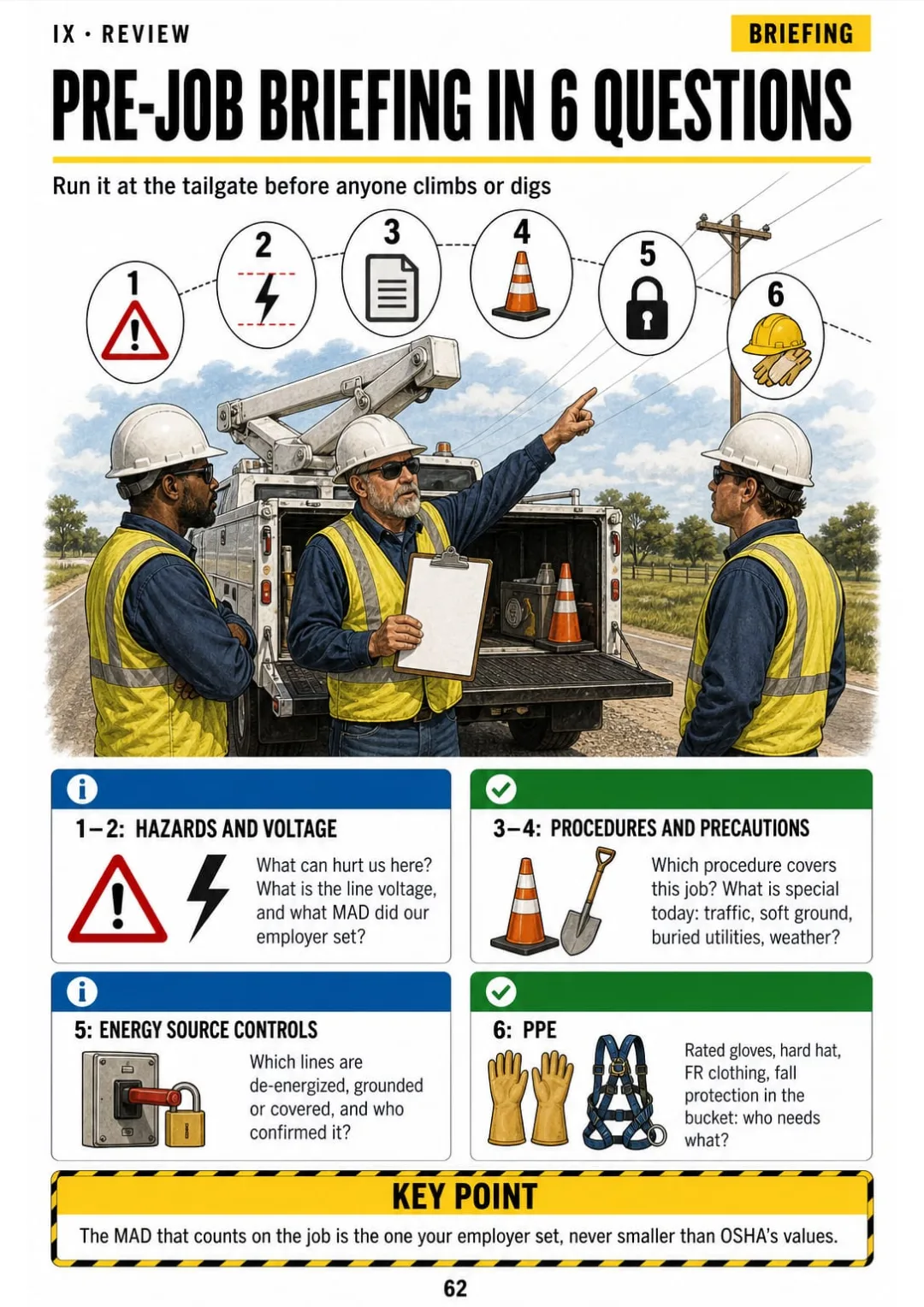
Hazards, voltage and MAD, procedures, precautions, energy controls, PPE: the 6-question briefing.
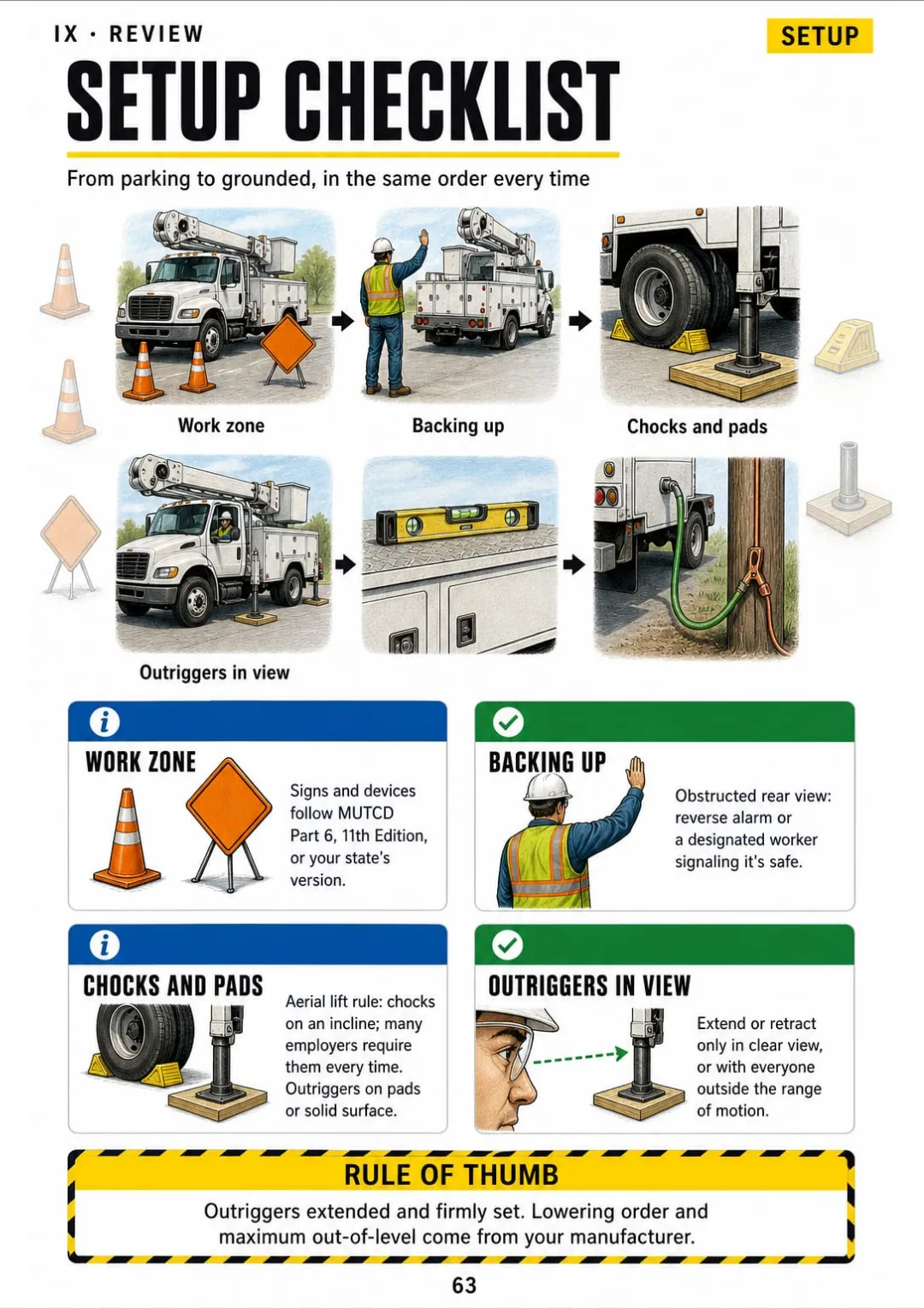
8 setup steps in order: size-up, work zone, position, brake and chocks, pads, outriggers, level, ground.

Swipe to see more →

These are real pages from the book. The table of contents is the full one: 9 parts and 63 topics.

The Problem Isn't You. It's How It Was Explained to You.

You're at the controls with a pole on the winch line, and the foreman asks for your radius. You glance at the boom length and hesitate.

The manual covers radius in two paragraphs that put boom length, boom angle and centerline in the same sentence. Read as text, radius and boom length blur into one number.

45-ft Class 3 pole at 28 ft over the side: the 5 steps with every number

In the book, radius is one page: the truck from the side, a flat arrow from the centerline of rotation to the load line, and the boom drawn above it. You see it at a glance: radius is horizontal, and it changes when the boom angle changes.

The rest works the same way: outriggers down in sequence, the boom angle indicator, structural vs. stability limits, the worked example in pounds and feet, minimum approach distance. Each one gets its own page.

Next time someone asks for your radius, you know where it's measured from and why it matters. You read the chart on the truck without going back to the manual.

COMPARE FOR YOURSELF

The Same Topic, Two Ways to Study It

THIS
  • The manual: line after line of text
  • The outrigger sequence explained only in words
  • You show up to your practical still unsure
Prior to operation, the operator shall ensure that all outriggers are deployed in accordance with the manufacturer's instructions and that pads of adequate bearing area are positioned beneath each outrigger float. Outriggers shall be extended and lowered so that the vehicle weight is transferred from the suspension to the outriggers, after which the unit shall be leveled within the tolerance specified by the manufacturer. Interlock functions shall be verified prior to boom operation, and outriggers shall not be retracted until the boom has been returned to the cradled position.
FOR THIS
  • Outriggers down in one drawing
  • The steps in a numbered box
  • You get to the practical knowing the order: deploy, load, level, interlock
Over the rear vs. over the side: each zone has its own capacity on the chart.
CONTENTS

Take a Look at the 9 Parts and 63 Topics

Know the truck, pre-use inspection, setting up on any ground, reading the load chart, digging with the auger, setting and pulling poles, bucket trucks and insulated booms, lines, distance and signals, and a final review: 67 pages, all illustrated

IKnow the Truck · pp. 5-10
  1. Digger Derrick vs. Bucket Truck: Two Jobs, Two Machines
  2. The Digger Derrick in Cutaway
  3. The Bucket Truck in Cutaway
  4. Where the Load Chart, Decals and Manual Live
  5. Hydraulics in One Page
  6. Who Can Operate: Trained, Qualified, Authorized
IIPre-Use Inspection · pp. 11-17
  1. The Walk-Around in the Same Order Every Time
  2. Hydraulic Hoses and Fittings
  3. Winch Line: When It Comes Out of Service
  4. Hooks, Latches and Rigging
  5. Controls and Interlocks Function Test
  6. Daily, Frequent and Periodic Inspections
  7. Write It Up: Defects and Lockout
IIISetting Up on Any Ground · pp. 18-25
  1. Site Size-Up Before You Park
  2. Work Zone and Traffic Control
  3. Positioning the Truck
  4. Chocks and Parking Brake
  5. Outriggers and Pads
  6. Soft, Frozen and Sloped Ground
  7. Outriggers Down in the Right Sequence
  8. Grounding and Bonding the Truck
IVReading the Load Chart · pp. 26-34
  1. What a Load Chart Is Telling You
  2. Radius Is Not Boom Length
  3. Boom Angle and the Angle Indicator
  4. Structural vs. Stability Limits
  5. Step 1–2: Configuration and Rotation Zone
  6. Step 3–4: Radius, Angle and Capacity
  7. Step 5: Subtract Everything That Hangs
  8. Worked Example in Pounds and Feet
  9. Estimating Pole Weight
VDigging with the Auger · pp. 35-40
  1. Unstowing the Auger
  2. Plumb Hole, Right Depth
  3. Spinning Off the Spoil
  4. Rock, Roots and Hard Ground
  5. Near Buried Utilities
  6. Restowing and Leaving the Hole Safe
VISetting and Pulling Poles · pp. 41-48
  1. Pole Classes and Lengths
  2. Picking the Pole Up
  3. Pole Claw and Pole Guide
  4. Swinging Over the Hole
  5. Setting in Energized Areas
  6. Plumbing, Backfilling and Tamping
  7. Pulling a Pole
  8. No Side Loading, No Dragging
VIIBucket Trucks and Insulated Booms · pp. 49-55
  1. Platform Rated Capacity
  2. Fall Protection in the Bucket
  3. Upper and Lower Controls
  4. Emergency Lowering
  5. Insulated Boom: What It Protects and What It Doesn't
  6. Categories of Insulated Aerial Devices
  7. Liners, Covers and Keeping the Boom Clean
VIIILines, Distance and Signals · pp. 56-61
  1. Minimum Approach Distance in One Picture
  2. Qualified vs. Unqualified Distances
  3. Boom Contact: What Happens and What You Do
  4. Signal Person and the Line of Sight
  5. Hand Signals Drawn: Hoist, Lower, Swing
  6. Hand Signals Drawn: Boom, Telescope, Stop
IXReview and Common Mistakes · pp. 62-67
  1. Pre-Job Briefing in 6 Questions
  2. Setup Checklist
  3. Load Chart in 5 Steps: One-Page Recap
  4. The Most Common Load Chart Mistakes
  5. The Most Common Setup and Pole Mistakes
  6. What the Practical Usually Looks At

One Page, One Topic, All Clear

Think of it this way:

You pull up to a job on a soft shoulder. The foreman wants the pole set before lunch, and you have to set outriggers on ground that won't hold a bare float.

In the book you open the page on soft, frozen and sloped ground and see the pad under each float, the slope drawn from the side and the level you're aiming for.

Green is insulated, red is not: the metal tip and lower boom still keep the approach distance.

Same with the load chart in 5 steps, the auger in rock and roots, swinging a pole over the hole, emergency lowering and hand signals: each one on its own page.

Digger & Bucket Truck Illustrated is 9 parts and 63 topics, all drawn, and it ends with a review section: setup checklist, the load chart on one page and the most common mistakes.

What you see drawn, you don't have to memorize.

What's Inside Digger & Bucket Truck Illustrated:

Ipp. 5-10

Know the Truck

Digger derrick vs. bucket truck, both trucks in cutaway, where the load chart and decals live, hydraulics on one page and who is allowed to operate.

IIpp. 11-17

Pre-Use Inspection

The walk-around in the same order every time, hoses and fittings, winch line removal criteria, hooks and latches, function tests, inspection intervals and how to write up a defect.

IIIpp. 18-25

Setting Up on Any Ground

Site size-up, work zone, positioning, chocks and brake, pads, soft, frozen and sloped ground, the outrigger sequence and grounding the truck.

IVpp. 26-34

Reading the Load Chart

What the chart tells you, radius vs. boom length, the angle indicator, structural vs. stability limits, the 5 steps, a worked example in pounds and feet and estimating pole weight.

Vpp. 35-40

Digging with the Auger

Unstowing the auger, a plumb hole at the right depth, spinning off spoil, rock and roots, buried utilities and leaving the hole safe.

VIpp. 41-48

Setting and Pulling Poles

Pole classes and lengths, the pick, pole claw and guide, swinging over the hole, energized areas, plumbing and tamping, pulling a pole and no side loading.

VIIpp. 49-55

Bucket Trucks and Insulated Booms

Platform rated capacity, fall protection, upper and lower controls, emergency lowering, what the insulated boom protects, device categories and keeping the boom clean.

VIIIpp. 56-61

Lines, Distance and Signals

Minimum approach distance in one picture, qualified vs. unqualified distances, what to do after boom contact, the signal person and every hand signal drawn.

IXpp. 62-67

Review and Common Mistakes

Pre-job briefing in 6 questions, the setup checklist, the load chart recap, the most common mistakes and what to be ready to show and explain at the practical.

At the end of the book: A review section with the setup checklist, the load chart in 5 steps on one page and the most common mistakes.
Plus: 2 Free Books

Operator Qualification Practice Questions

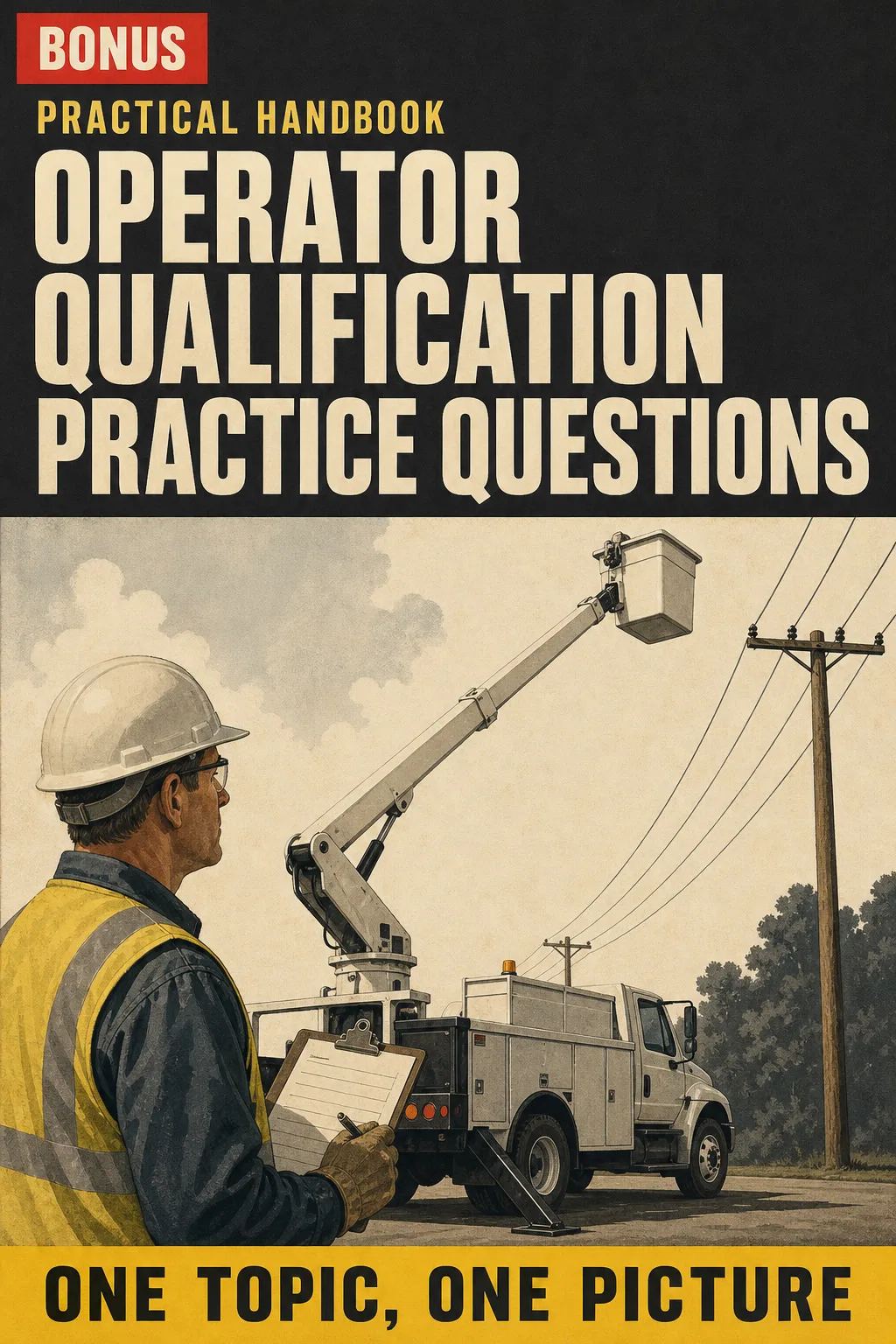
BONUS 1: «Operator Qualification Practice Questions»

Value on its own: US$ 17.90

Test yourself with exam-style written questions on setup, load charts, approach distance and signals, each one answered and explained, so you know what you've got down before the real test.

Quick-Review Cards: Setup, Load Chart, Signals

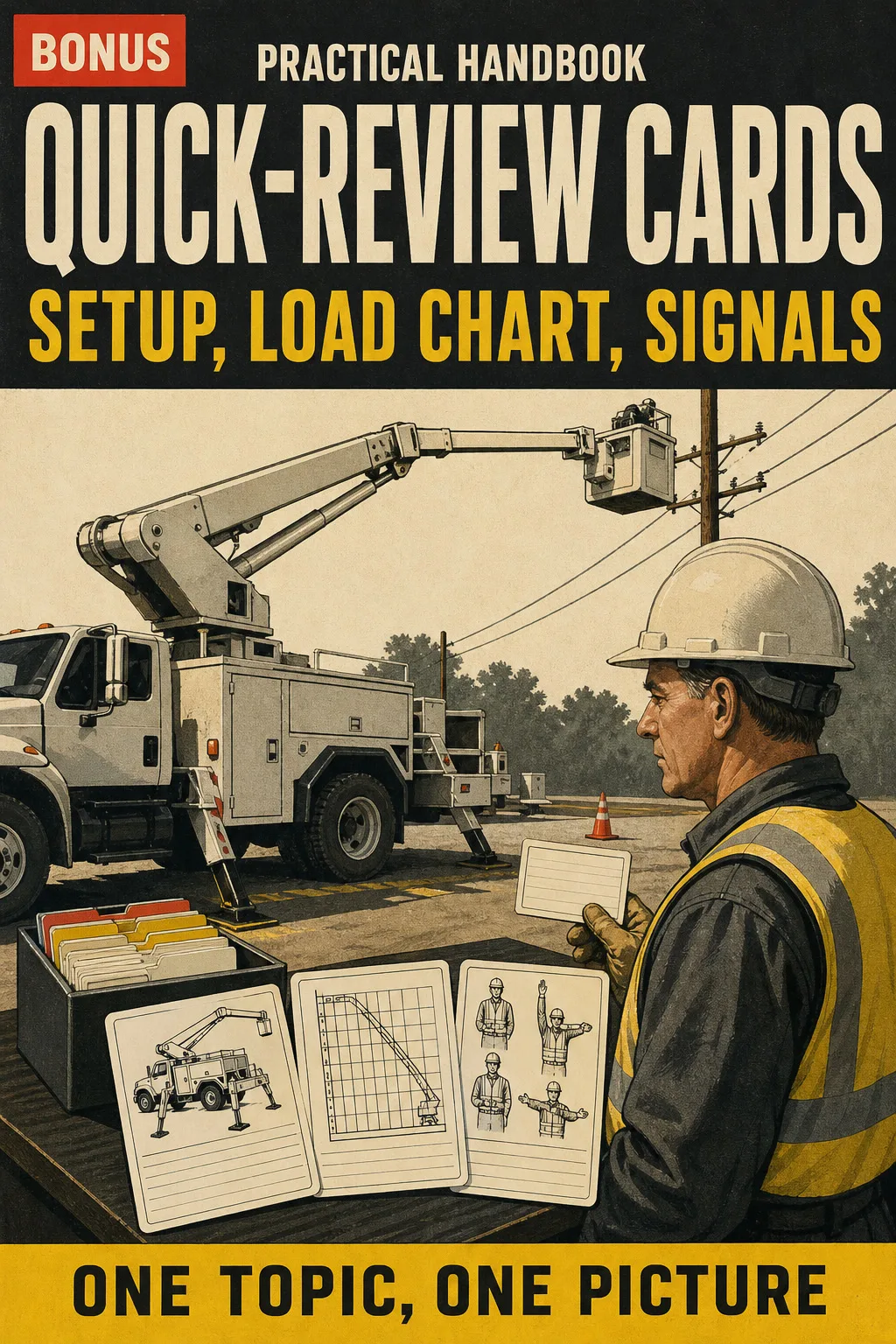
BONUS 2: «Quick-Review Cards: Setup, Load Chart, Signals»

Value on its own: US$ 14.90

The steps you most need to have down, one card each, to review on your break or the night before your practical.

Digger & Bucket Truck Illustrated with 2 Free Books

  • Digger & Bucket Truck Illustrated: 67 illustrated pagesUS$ 63
  • BONUS 1: Operator Qualification Practice QuestionsUS$ 17.90
  • BONUS 2: Quick-Review Cards: Setup, Load Chart, SignalsUS$ 14.90
  • High-resolution PDF to printIncluded
Total value US$ 95.80
YOUR PRICE:
US$ 27
You save US$ 68.80
YES, I WANT DIGGER & BUCKET TRUCK ILLUSTRATED FOR US$ 27

📄 This is a digital PDF book sent to your email: nothing is printed or shipped.

Secure purchaseEncrypted payment30-day guarantee

PDF by email: We email you Digger & Bucket Truck Illustrated as a PDF, together with the two free books. It's a single payment: no installments, no extra charges.

Who This Book Is For

You're moving up to the digger

You're moving up to the digger

You've worked the ground for years and now you're getting the controls. The book shows you setup, the load chart and pole setting in the order you'll do them on the truck.

Your qualification date is set

Your qualification date is set

Written test and practical on the calendar. You review one topic per page, then check yourself with the practice questions and the quick-review cards.

You've run the truck for years

You've run the truck for years

New company, or time to requalify. You go back over what you don't use every day, like the load chart steps and approach distances, without rereading the whole manual.

Everything You Get Today

US$ 95.80US$ 27
YES, I WANT DIGGER & BUCKET TRUCK ILLUSTRATED FOR US$ 27

📄 This is a digital PDF book sent to your email: nothing is printed or shipped.

30DAYS
GUARANTEE

30-Day Guarantee

Try Digger & Bucket Truck Illustrated for 30 days, bonus books included.

We refund everything if the file won't open, if the book isn't what you see here, if you were charged twice or if the email doesn't arrive. Just email us.

You pay once. No subscriptions.

Frequently Asked Questions

Is it for me if I've been on the truck for years and just need to requalify?

Yes. It doesn't start from zero, and it doesn't skip things either: every topic is one page, so you go straight to what you need, like the load chart steps, approach distances or the outrigger sequence.

Does it work for my truck, and for what my employer or certifier will ask?

Yes. The load chart method works with any manufacturer's chart: you learn the 5 steps in the book, then you read the chart on your own truck. The content follows OSHA 29 CFR 1910.269 and 1926 Subpart V, ANSI A92.2 and A10.31, the standards that apply to this work. Every interval, distance and standard number is flagged so you can check it against your employer's procedure, your manufacturer and the current official source.

Is it official material?

No. It's an independent illustrated study book. It isn't issued or endorsed by any agency, certifying body, employer or manufacturer.

Does it replace my training or qualification?

No. It helps you study and review, and it doesn't give you a certificate or operator card. Your employer's training, the hands-on evaluation, the manufacturer's manual and your company's procedures still apply. Work near energized lines is only for qualified, authorized personnel.

Are the practice questions the ones on the test?

No. They're written for this book, in the style of a written qualification test, so you can see what you've got down. They aren't official questions from any exam.

When and how do I get it?

The book and the 2 bonus books come as PDFs by email, to the address you enter at checkout.

Do I have to pay every month?

No. It's a one-time payment. No subscription.

Can I have it on paper?

Yes. The PDF is printable, so you can print it at home or at a print shop and keep it in the truck.

How does the refund work?

You have 30 days. We refund everything if the file won't open, if the book isn't what you see on this page, if you were charged twice or if the email doesn't arrive: just email us.

Before You Close This Page

No more rereading the manual and remembering none of it.

Radius, outriggers and approach distance: you see them drawn, and that's it.

You get to your qualification knowing where everything is.

Drawings make studying faster.

The book is right below.

One-time payment: US$ 27 · Guarantee: 30 days · PDF by email

YES, I WANT DIGGER & BUCKET TRUCK ILLUSTRATED FOR US$ 27

📄 This is a digital PDF book sent to your email: nothing is printed or shipped.